
Former environment minister Jairam Ramesh on Thursday virtually backed the non-governmental organisation Greenpeace in the backdrop of an Intelligence Bureau report warning that the NGO is a threat to the country's economic growth.

Andrey Botikov, one of the scientists who helped to create the Russian COVID-19 vaccine Sputnik V, was strangled to death with a belt at his apartment in Moscow and police have arrested a suspect in connection with the murder, according to a Russian media report on Saturday.

India must be prepared to deal with climate disasters, geopolitical confrontations, and social strife linked to global events, asserts Jayant Sinha, chairman of Parliament's Standing Committee on Finance.

As much as one would have liked a glimpse into the lady's culinary excellence, Tarla acquires its endearing character in Huma Qureshi and Sharib Hashmi's harmonious display of doting husband and wife, observes Sukanya Verma.

India also went on an overdrive in expanding its military engagement with like-minded countries in its neighbourhood and beyond in the face of China's relentless attempts to become a regional hegemon and establish its primacy in South Asia.

When things don't materialise the way toxic people want them to, they may try different ways to control you.

Any miscalculation and miscommunication are fraught with the risk of a major catastrophe, warns Rup Narayan Das.

In the Interim Budget, Finance Minister Nirmala Sitharaman announced that a high power committee would be set up to consider the challenges arising from 'fast population grown and demographic changes.' 'But who wants data? It pays to feed people's fears, insecurities and apprehensions. If such fears don't exist, they must be created,' her husband Parakala Prabhakar says in this fascinating excerpt from his book, The Crooked Timber of New India: Essays on a Republic in Crisis.

According to the Pentagon report, the PLA is creating options for dissuading, deterring, and defeating external intervention in the Indo-Pacific region.

In UK, France and Germany, the president and CEO of Edelweiss Securities, anticipates votes incrementally in favour of local protection and de-globalisation.

Pakistan-India bilateral relations remained frozen for the fourth year over the vexed Kashmir issue but analysts hope the strained ties could be repaired if Nawaz Sharif becomes the prime minister for a record fourth time in the general elections in February in the absence of his main challenger Imran Khan who is in jail in multiple cases.

Amid rising geopolitical risks, a vast majority of Indian CEOs have indicated in a survey that they are reducing or planning to reduce operating costs, even as they are more upbeat than their global peers on their country's economic prospects. However, most of the companies do not plan to cut their headcount or salaries, found the annual Global CEO Survey released by consultancy giant PwC here on the first day of the World Economic Forum meeting on Monday. The survey also found that about four in ten CEOs (40 per cent of global and 41 per cent of India respondents) do not expect their companies to be economically viable in 10 years if they continue on their current path.

The rupee plunged 58 paise to close at an all-time low of 81.67 (provisional) against the US dollar on Monday as the strengthening of the American currency overseas and risk-averse sentiment among investors weighed on the local unit. Moreover, escalation of geopolitical risks due to conflict in Ukraine, a negative trend in domestic equities and significant foreign fund outflows sapped investor appetite, forex traders said. At the interbank foreign exchange market, the local currency opened at 81.47, then fell further to close at an all-time low of 81.67 against the American currency, registering a decline of 58 paise over its previous close.

Moody's Investors Service has warned that India, along with the Philippines, Thailand, and Vietnam are highly vulnerable to volatile food and energy prices in the Asia-Pacific region as the Russia-Ukraine conflict continues to disrupt supplies and raise the cost of agricultural products, especially cereals and vegetable oils, as well as fertilizers and other agricultural inputs. This is so because these countries have a higher weighting of energy and food prices in their consumer price index (CPI) baskets, Moody's said in its report released on Tuesday. The weighting of energy and food in overall Indian CPI stands at over 55 per cent.
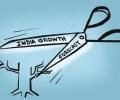
India's economy is projected to slow to 6.5 per cent in the fiscal year starting April but will remain the fastest growing major economy in the world as it fared better in dealing with the extraordinary set of challenges the globe has faced, the Economic Survey 2022-23 said on Tuesday. India's gross domestic product (GDP) growth of 6.5 per cent in 2023-24 compares with an estimated 7 per cent expansion in current fiscal year (April 2022 to March 2023) and 8.7 per cent in the previous year. Like the rest of the world, India too faced an extraordinary set of challenges in tightening financial conditions and supply chain disruptions from a prolonged war in Europe but "withstood them better than most economies", the annual document detailing the state of the economy said.

Chirag Daruwalla, who is following in the footsteps of his famed astrologer father, the late Bejan Daruwalla, makes his predictions for the New Year.

Following are the highlights of the Economic Survey 2022-23 tabled in Parliament on Tuesday

Equity and oil markets can breathe easy for now, as the developments in Russia are unlikely to trigger a runaway rally in crude oil prices, said analysts. India, which imports nearly 80 per cent of its crude oil requirement, has been dependent on cheap Russian oil over the past few months to keep inflation - a sore point for the equity markets - in check. For the Indian markets that are expected to remain volatile amid these developments, analysts believe, the progress of monsoon, fund flows - both foreign institutional investor (FII) and domestic - and the upcoming corporate earnings season back home remain key.

The G20 declaration, which hit snags on the language to describe the Ukraine war, amounted to a 'coup' for host Prime Minister Narendra Modi though the final compromise statement reflected a stand far softer than those the United States and its Western allies have adopted on Russia, the world media said on Sunday.

India is one of the few countries in the region that enjoys good relations with both Israel and Saudi Arabia, and IMEC would allow it to recreate the old Spice Route to Europe. All this is in jeopardy now, notes Rajeev Srinivasan.

A decline in demand from six of India's top 10 import partners -- China, Saudi Arabia, Iraq, South Korea, Australia, and Singapore -- resulted in India's imports hitting a 17-month low of $50.6 billion in January, showed the data compiled by the department of commerce. Shipments from South Korea, Australia, and Singapore declined by 14.1 per cent, 26.7 per cent, and 9.8 per cent, respectively. Among the 10, growth in inbound shipment was seen only in the case of the United Arab Emirates (12.1 per cent), the US (27.4 per cent), Russia (297.4 per cent), and Indonesia (22.9 per cent).

Policymakers should aspire to restore the pre-Independence environment where the rupee was trusted and used all over South Asia, in Southeast Asia, in West Asia, and in East Africa, suggests Ajay Shah.

'Despite the current tension at Doklam and the risk of escalation on the Himalayan land frontier, it is the Indian Ocean we need to worry about more,' says Nitin Pai.

A yellow glow is likely to stand out amid grey geopolitical clouds in 2023, with gold price projected to touch Rs 60,000 per 10 grams in the Indian market as more investors veer towards safe-haven assets. In a year where volatility was more a norm than an exception, gold prices in the international market oscillated from a peak of $2,070 per ounce in March to a low of $1,616 per ounce in November and is steadily recovering since then, according to market experts. At the beginning of 2022, gold prices were around $1,800 an ounce.
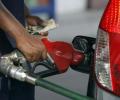
A looming global shortage of diesel in Europe presents India with more than one opportunity to profit from strong margins. A shortage of the fuel, a key contributor to inflation, has been exacerbated by the conflict in Ukraine, and western sanctions on Russian fuel supplies. The slowdown in natural gas supply means the West needs diesel to heat their homes this winter.

'Investors should hold equity assets for 3 to 5 years.'
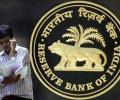
Reserve Bank will have to constantly re-assess the "dynamic and fast changing situation" and tailor its actions accordingly, Governor Shaktikanta Das said during the recent meeting of the Monetary Policy Committee (MPC) which decided to maintain status quo on key interest rate. According to the minutes of the six-member MPC meet released by Reserve Bank of India (RBI) on Friday, the five other members had also expressed a similar opinion amid the ongoing Russia-Ukraine conflict's impact on the global and domestic economies. MPC, which held its meeting from April 6-8, unanimously decided to keep the borrowing costs unchanged at a record low for the 11th time in a row in a bid to continue supporting economic growth despite inflation edging higher in the aftermath of Russia-Ukraine conflict.

India's economy continues to be robust, but downside risks such as rising crude oil prices, adverse weather conditions, and the global banking crisis outweigh the upside potential in gross domestic product (GDP) growth in the current financial year (FY24), the finance ministry said on Tuesday in its Monthly Economic Review for March. "We reiterate that downside risks to our official forecast of 6.5 per cent for real GDP growth in FY24 dominate upside risks," the review said. "Opec's surprise production cut has seen oil prices rise in April, off their lows of low-seventies per barrel in March.

One hopes in his next term, Narendra Modi will take up the mission of inculcating respect for following rules in Indians as a mission. Therein lies the chance for India to become a developed country, asserts Colonel Anil A Athale (retd).

Days after Moody's cut its gross domestic product (GDP) forecast for financial year 2022-23 (FY23) after the official GDP print for the June quarter came in lower than expectations, the global ratings agency said it would maintain its long-term sovereign debt credit rating and outlook on Asia's third-largest economy. "The credit profile of India reflects key strengths, including its large and diversified economy with high growth potential, a relatively strong external position, and a stable domestic financing base for government debt," Moody's said on Tuesday. "We do not expect rising challenges to the global economy, including the impact of the Russia-Ukraine military conflict, higher inflation, and the tightening financial conditions on the back of policy tightening, to derail India's ongoing recovery from the pandemic in 2022 and 2023," it said.

It is evident that the younger generation is increasingly choosing to postpone or completely forego the idea of getting married, observes Sybil Shiddell, country manager India, Gleeden, a discreet extra marital dating Web site.
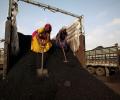
Conflicting views on Coal India (CIL) might leave investors confused. The bullish perspective that India has strong power demand (and also high steel production) means high demand for coal. As CIL is the monopoly producer of coal -- supplying over 80 per cent of the domestic requirement - the public sector undertaking should be a beneficiary of the rising power demand.

The big names in Indian cricket, of late, have opted to stay away when it comes to applying for the national selector's job.

'2020 will show whether India's troubled domestic economic and political house reveals a mismatch in their strategic association or whether closer strategic ties are yet possible,' says Anita Inder Singh.

Delhi, daddy issues, drivers, domestic help, politics, patriarchy, sexuality, sexism, choices, compromises, community, religion, real estate, motherhood, marriage -- Gulmohar offers a loaded, layered understanding of familial relationships and its indirect impact on the people at the periphery, notes Sukanya Verma.

Pucker those lips and blow out a loud whistle for Chopra, Priyanka Chopra, applauds Sukanya Verma.

Adani Group is expected to report a 20 per cent rise in its earnings before interest, tax, depreciation, and amortisation (Ebitda) at Rs 61,200 crore for the year that ended in March 2023 (2022-23, or FY23), according to a note submitted by the group to lenders recently. The group had earned Ebitda of Rs 57,299 crore in the preceding financial year that ended in March 2022 (2021-22). The group's gross debt was Rs 2.27 trillion as of March 31, 2023, and has projected to not take on additional debt until it lowers its existing one.

With no major domestic market moving triggers this week, equities would continue to look at global factors, foreign fund movement and trend in the rupee for further direction, analysts said. "This week we have the August month F&O expiry where bulls are looking for rest after a gain in the August series," said Santosh Meena, head of research, Swastika Investmart Ltd. "There are not a lot of triggers but global cues, August month F&O expiry, and FIIs' behaviour will be important factors in the direction of the market," he noted.
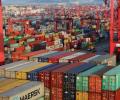
Overcoming its initial concerns, national reinsurer GIC Re has contributed to the formation of an insurance pool to cover most imports from Russia. While it will be called the fertiliser pool with a corpus of Rs 500 crore, it can be used to cover the risks of oil and gas imports too. This was decided by a clutch of Indian insurance companies, led by the state-owned ones. GIC Re's share is about 40 per cent in the pool. Last month, GIC Re had shot off a letter to all non-life insurance companies that underwrite marine risks not to ask it for reinsurance of cargoes that originate from Russia.
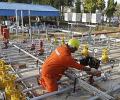
India's top oil and gas producer ONGC wants the government to scrap windfall profit tax levied on domestically produced crude oil and instead use the dividend route to tap into bumper earnings resulting from surge in global energy prices. The firm also favours a floor price for natural gas at $10 per million British thermal unit -- the current government-dictated rate -- to help bring deposits in challenging areas to production, two sources aware of the matter said. State-owned Oil and Natural Gas Corporation (ONGC) management during discussions with government officials stated that levying windfall profit tax on domestic oil producers, while at the same time reaping rich savings from buying discounted oil from Russia was unfair.
